How many types of Chinese are there?
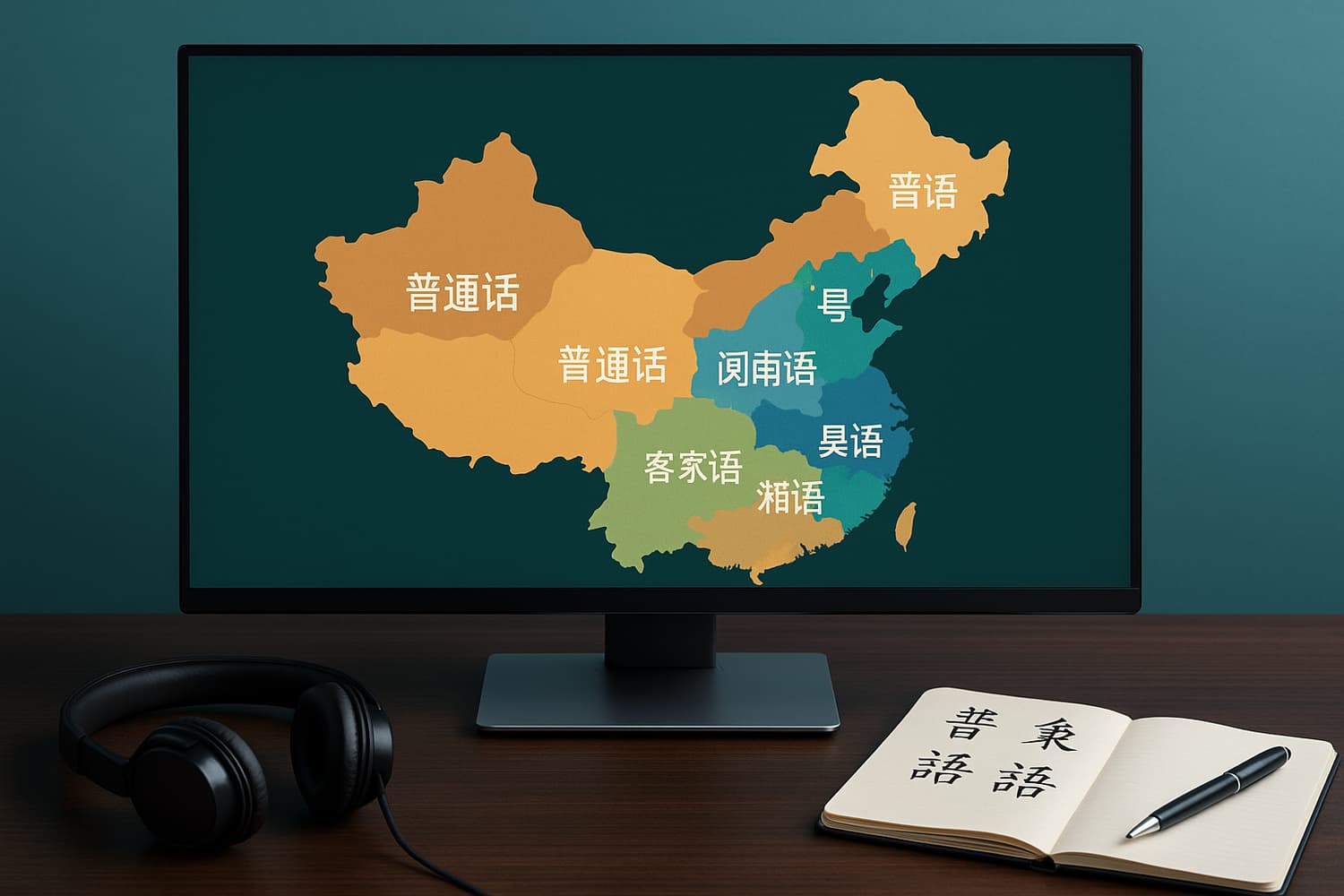
If you are looking for Chinese-Spanish-English interpreters or translators, the first thing to know is that "Chinese" can refer to several spoken languages and two writing systems.
Spoken Chinese (main varieties)
Mandarin (普通话 Pǔtōnghuà): official language in China; also widely used in Singapore, Malaysia and the diaspora. It is the standard for business, conferences and government.
Cantonese: Guangdong and Hong Kong; very present in Chinese communities abroad.
Wu (Shanghainese): Shanghai and areas of Zhejiang.
Hakka (客家话): southern China and Southeast Asia.
Min (闽): includes Minnan / Hokkien / Teochew; Fujian, Taiwan and diaspora.
Gan / Xiang, among others: regional use.
In business practice in Mexico and LatAm, almost everything is solved in Mandarin, but it is advisable to confirm with your counterpart whether Cantonese or another variety will be available.
Written Chinese (two systems)
Simplified characters: standard in mainland China and Singapore.
Traditional characters: standard in Taiwan, Hong Kong and Macao; also used by ancient diasporas.
The difference is graphical (number of strokes), not in meaning. Examples: 馬→马 (horse), 龍→龙 (dragon), 藥→药 (medicine), 書→书 (book), 車→车 (car), 國→国 (country).
If the subject interests you beyond your project, our director wrote about how many characters you actually need to read Chinese on the blog of Lemma, the language learning platform he co-founded.
What does it mean for your projects?
For meetings and events: you usually need Mandarin ↔ Spanish/English interpretation (simultaneous in booth/bidule or consecutive/liaison).
For documents: define whether the text comes in simplified or traditional; we adjust glossaries, terminology and formatting according to the market (mainland China vs. Taiwan/Hong Kong).
Coverage
We serve CDMX, Monterrey, Guadalajara, Queretaro, Puebla and projects throughout Mexico, Latin America and North America (on-site and remote). Tell us about your event and we will send you a customized proposal.